The Trust Stack Base Is Building
On March 31, Base published its 2026 strategy. The three key pillars are: global markets, stablecoin payments, and a home for builders - including AI agents. Impressive figures back this up: $17 trillion in stablecoin transaction volume by 2025 across 26 currencies and 17 countries. The Base App operates in over 140 countries. Over 50 teams have been funded through Base Batches. The number one platform for on-chain BTC spot trading.

Economically, Base looks like a sports car with no equal on the market. But there's a catch. Every sports car needs a "good road" - infrastructure. Trust is that very road for Base, the one that sets it apart from its predecessors.
Base understands this. And quietly, layer by layer, it is building the most comprehensive trust stack in crypto.
Base understands this. And quietly, layer by layer, it is building the most comprehensive trust stack in crypto.
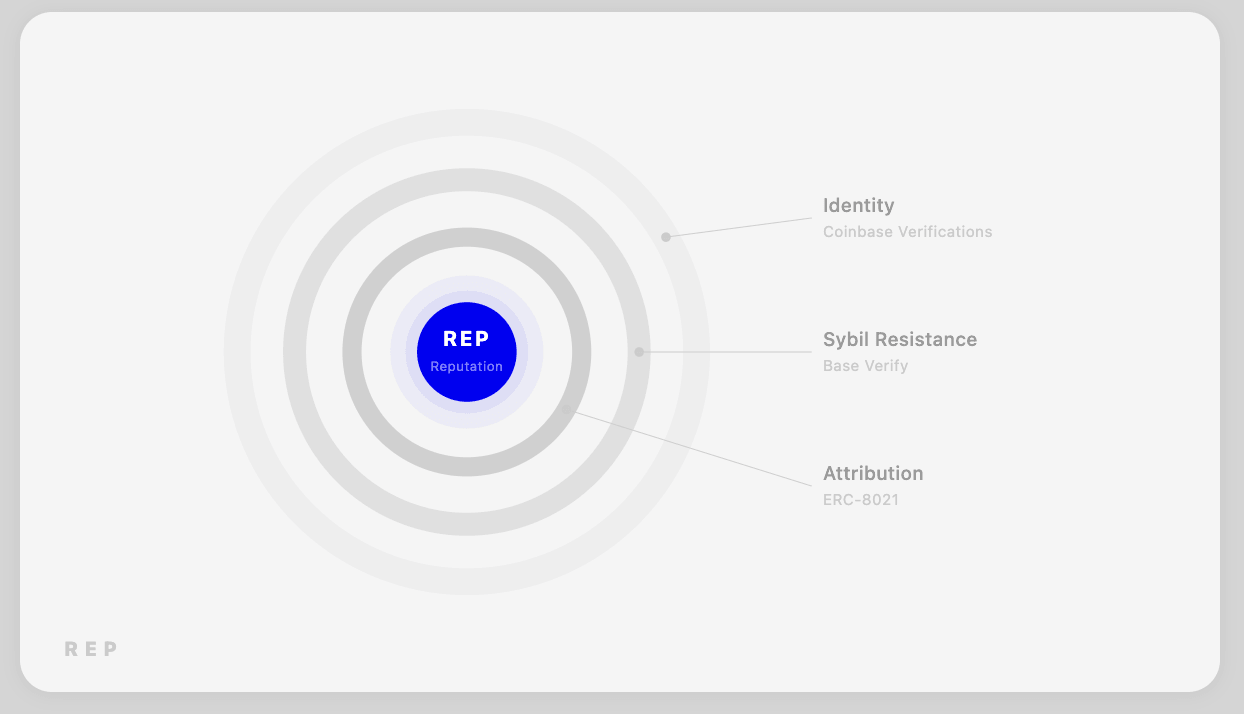
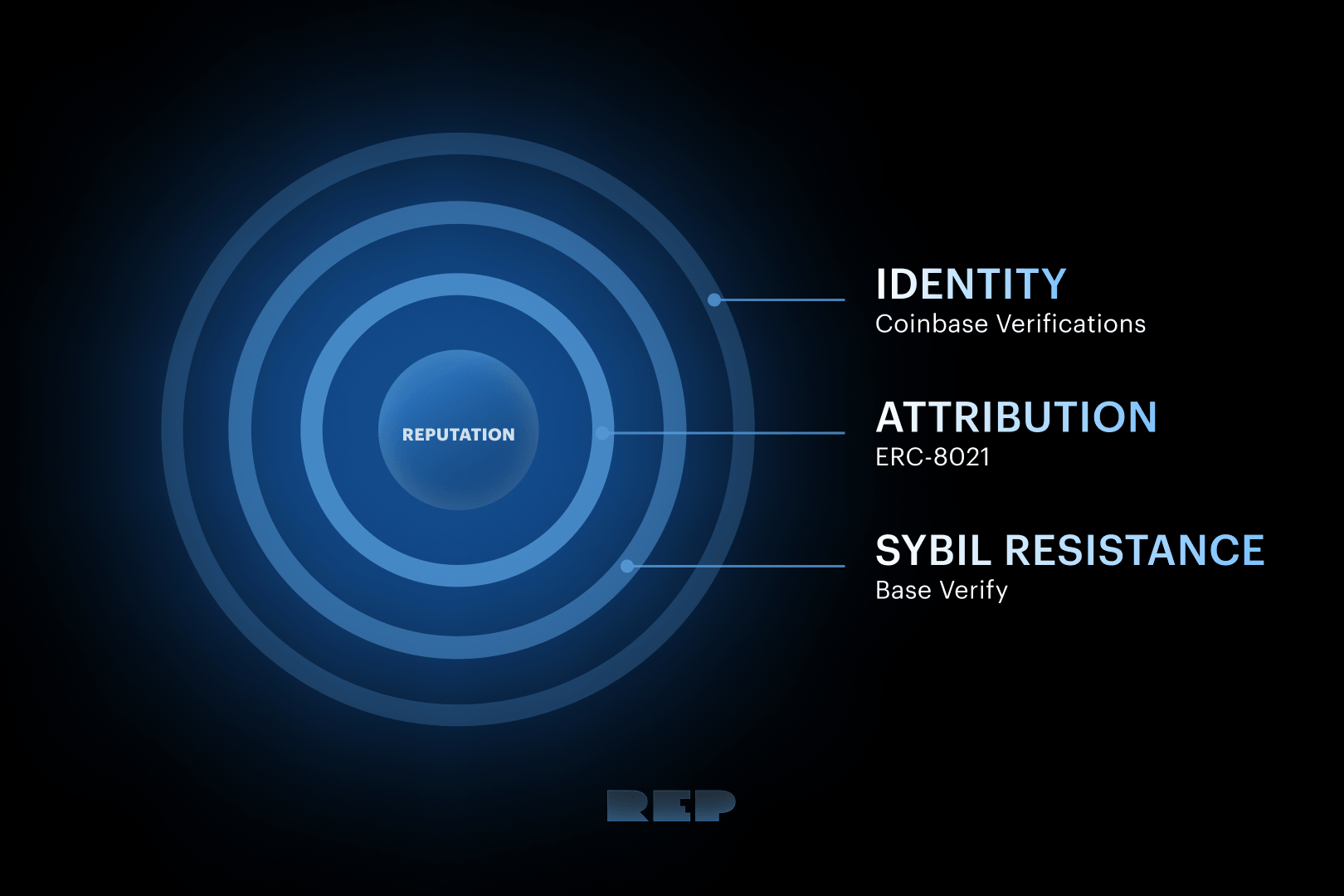
Layer 1: Identity
The foundation. Coinbase Verifications uses the Ethereum Attestation Service to store a simple onchain fact: this wallet belongs to a verified Coinbase account holder. Soulbound. Composable. Any dApp on Base can read it.
It's a binary signal - verified or not - but it's onchain and permanent. The building block everything else sits on top of.
It's a binary signal - verified or not - but it's onchain and permanent. The building block everything else sits on top of.
Layer 2: Sybil resistance
Knowing someone is real doesn't mean they're unique. One person, fifty wallets, fifty claims. That's the problem Base Verify solves.
The mechanism is elegant: connect a wallet, verify a social account (X, Instagram, TikTok, Coinbase). The system generates a deterministic token. Connect a different wallet, verify the same account - same token. The app's database rejects the duplicate. One account, one claim, regardless of how many wallets you control.
Human Passport adds a complementary layer - an ML model trained specifically on Base that analyzes onchain patterns to distinguish human behavior from bot activity. Not binary, but scored: how likely is this wallet to be a real person?
Together, these answer a critical question: is this a unique human?
The mechanism is elegant: connect a wallet, verify a social account (X, Instagram, TikTok, Coinbase). The system generates a deterministic token. Connect a different wallet, verify the same account - same token. The app's database rejects the duplicate. One account, one claim, regardless of how many wallets you control.
Human Passport adds a complementary layer - an ML model trained specifically on Base that analyzes onchain patterns to distinguish human behavior from bot activity. Not binary, but scored: how likely is this wallet to be a real person?
Together, these answer a critical question: is this a unique human?
Layer 3: Attribution
You know the user is real. Now: which app brought them here?
ERC-8021 - Builder Codes, that solves onchain attribution at the transaction level. Every transaction carries a tag identifying the app that generated it. The tag lives in the calldata suffix - invisible to smart contracts, readable by indexers. About 400 gas overhead.
This lets protocols answer questions they couldn't before: which frontend drives the most volume? Which integrator brings the most valuable users? Builder Codes create a direct line between apps and the transactions they facilitate - enabling leaderboards, analytics, and revenue sharing with builders who bring real value.
Haseeb Qureshi, Managing Partner at Dragonfly, has been pushing this direction: he proposed "holder scores" - allocations based on users' historical behavior rather than platform-specific metrics. Better score, larger allocation. "Farmers are obviously not useful to projects," he wrote on X. "I'm extremely skeptical of easily farmed metrics."
Attribution is the beginning of that. It answers: which apps drive activity?
ERC-8021 - Builder Codes, that solves onchain attribution at the transaction level. Every transaction carries a tag identifying the app that generated it. The tag lives in the calldata suffix - invisible to smart contracts, readable by indexers. About 400 gas overhead.
This lets protocols answer questions they couldn't before: which frontend drives the most volume? Which integrator brings the most valuable users? Builder Codes create a direct line between apps and the transactions they facilitate - enabling leaderboards, analytics, and revenue sharing with builders who bring real value.
Haseeb Qureshi, Managing Partner at Dragonfly, has been pushing this direction: he proposed "holder scores" - allocations based on users' historical behavior rather than platform-specific metrics. Better score, larger allocation. "Farmers are obviously not useful to projects," he wrote on X. "I'm extremely skeptical of easily farmed metrics."
Attribution is the beginning of that. It answers: which apps drive activity?
Layer 4: Reputation
This is where the stack reaches its edge.
Identity tells you someone is real. Sybil resistance tells you they're unique. Attribution tells you which app they used. None of these tell you what they've done over time - and how well.
A wallet that provided liquidity for 12 months, repaid every loan, and voted in 15 governance proposals looks identical to a fresh wallet that just passed identity verification. Both are verified. Both are attributed. Neither has a score.
Identity tells you someone is real. Sybil resistance tells you they're unique. Attribution tells you which app they used. None of these tell you what they've done over time - and how well.
A wallet that provided liquidity for 12 months, repaid every loan, and voted in 15 governance proposals looks identical to a fresh wallet that just passed identity verification. Both are verified. Both are attributed. Neither has a score.
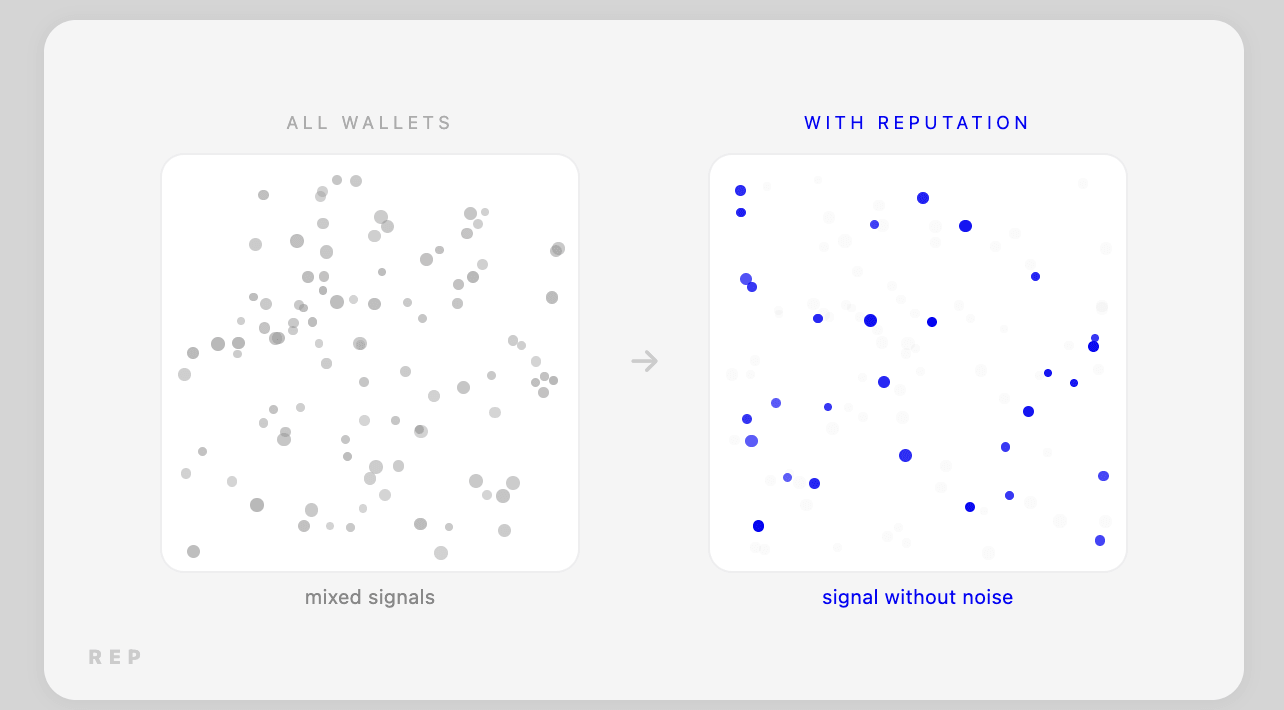
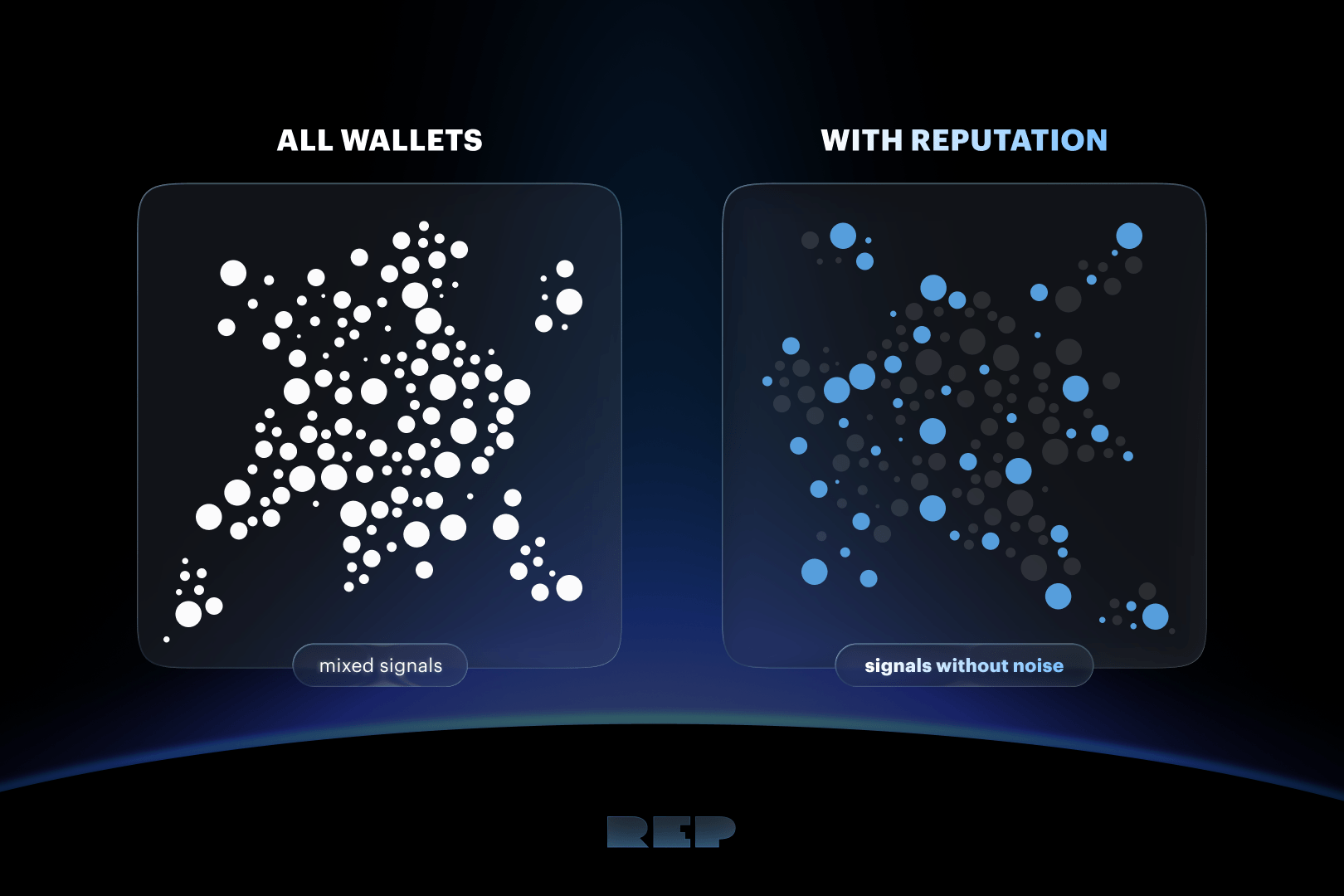
The industry learned what happens without this layer. When LayerZero prepared their airdrop, they found 59% of all participating wallets were sybils - 803,000 addresses removed before distribution. After the purge, message volume dropped 58%, but average transaction value rose 78% to $400+. ZRO outperformed every peer token launched in the same window.
CEO Bryan Pellegrino called it the "durable users" strategy: "Our goal was to reward the real users, the people who are the most dedicated and durable users."
Fewer wallets. Higher quality. Better outcome. But the filtering happened after the farming - not before. A reputation layer lets you measure quality from day one.
Parts of this layer are already being built. Talent Protocol scores builder activity on Base - GitHub commits, contract deployments, dev contributions. Cred Protocol analyzes lending behavior across chains and predicts credit risk. Both solve real pieces of the puzzle.
What's still emerging: portable reputation that captures the full picture - not just onchain activity, but social presence, contributions, and connections across platforms. A trust profile you build once and carry everywhere. Private by default. Shareable by choice.
CEO Bryan Pellegrino called it the "durable users" strategy: "Our goal was to reward the real users, the people who are the most dedicated and durable users."
Fewer wallets. Higher quality. Better outcome. But the filtering happened after the farming - not before. A reputation layer lets you measure quality from day one.
Parts of this layer are already being built. Talent Protocol scores builder activity on Base - GitHub commits, contract deployments, dev contributions. Cred Protocol analyzes lending behavior across chains and predicts credit risk. Both solve real pieces of the puzzle.
What's still emerging: portable reputation that captures the full picture - not just onchain activity, but social presence, contributions, and connections across platforms. A trust profile you build once and carry everywhere. Private by default. Shareable by choice.
How the stack connects
Each layer depends on the ones beneath it, we can see this clearly in the picture:
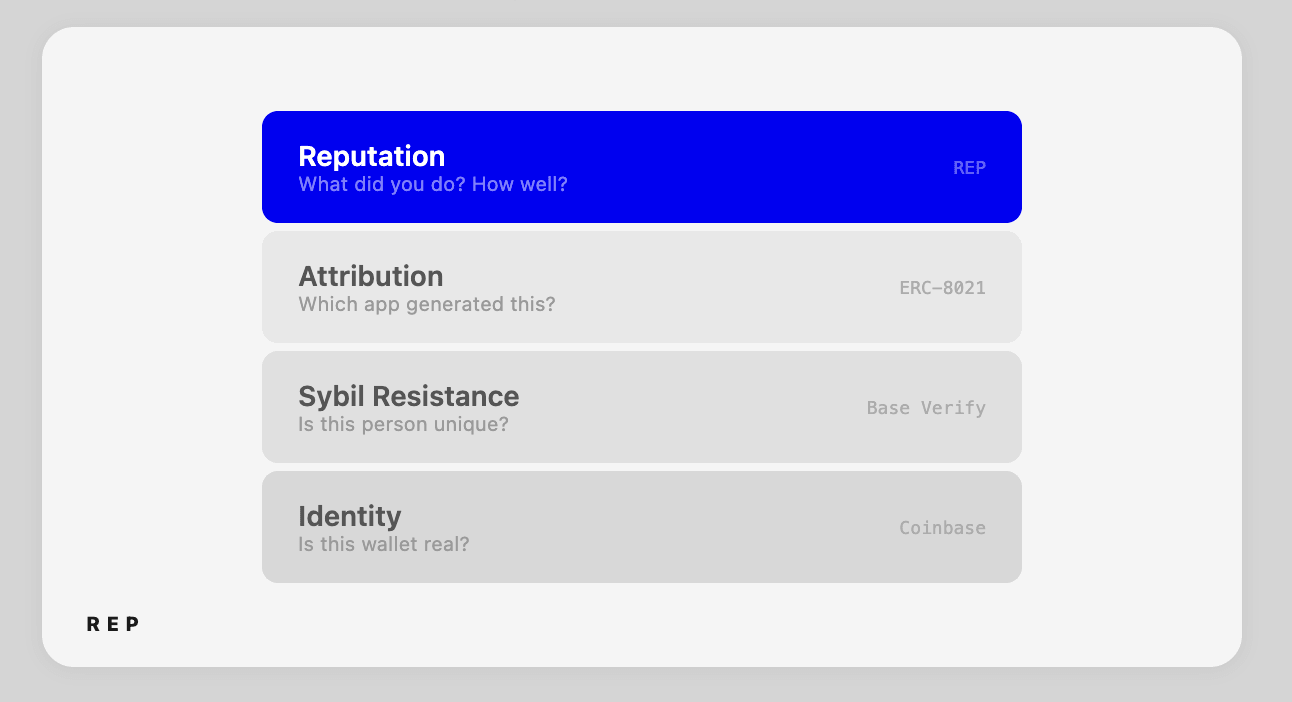
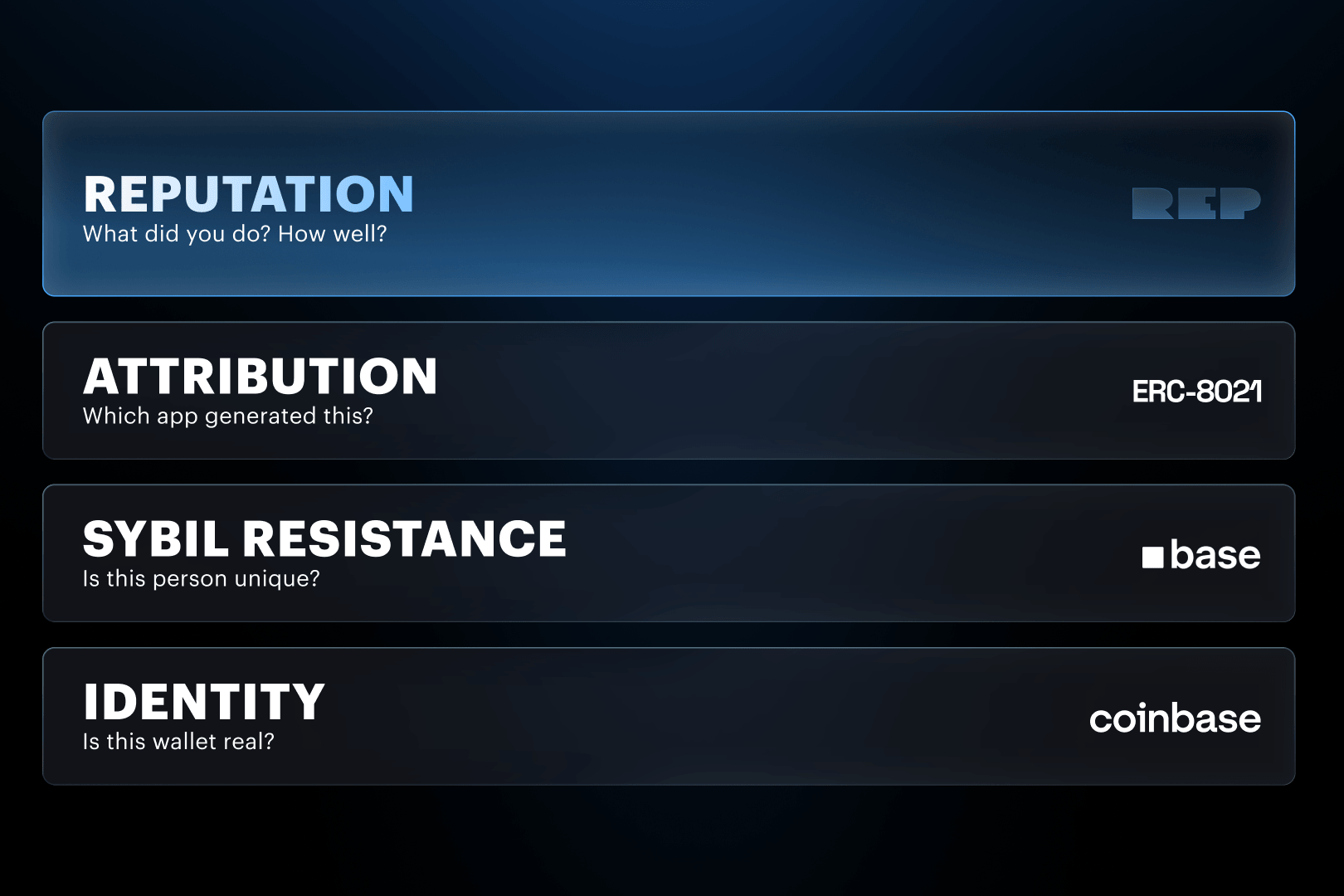
Identity enables sybil resistance: you need to know who someone is before you can check if they're unique. Sybil resistance enables attribution - volume metrics are meaningless if bots inflate them. Attribution enables reputation - knowing which app a verified, unique user came through is the context that makes behavioral scoring accurate.
The full picture
Base isn't just building an economy. It's building the trust infrastructure for that economy - and it's further along than most people realize.
The progression from identity to attribution to reputation is the same pattern we see in traditional finance. First: know your customer (KYC). Then: know your counterparty (credit bureaus). Then: score them (FICO). Each layer took decades in traditional finance. In crypto, they're being built in parallel.
The question isn't whether reputation scoring comes to Base. It's who builds it, how it composes with the layers below, and whether it's ready before the economy needs it.
That's what REP is building - a portable trust profile from things you've already done. Connect your wallets, your socials, your activity across platforms. Carry that reputation everywhere. 3.4 million people are already using it.
Identity tells the ecosystem you're real. Reputation tells it why you matter.
The progression from identity to attribution to reputation is the same pattern we see in traditional finance. First: know your customer (KYC). Then: know your counterparty (credit bureaus). Then: score them (FICO). Each layer took decades in traditional finance. In crypto, they're being built in parallel.
The question isn't whether reputation scoring comes to Base. It's who builds it, how it composes with the layers below, and whether it's ready before the economy needs it.
That's what REP is building - a portable trust profile from things you've already done. Connect your wallets, your socials, your activity across platforms. Carry that reputation everywhere. 3.4 million people are already using it.
Identity tells the ecosystem you're real. Reputation tells it why you matter.