The Invisible Force That Built the World
This is the start of a series. The subject is a big one: coordination and trust, the foundation of everything people have built. We want to do it justice, layer by layer.
In this first part, we lay the groundwork: how people learned to act together. Everything else will stand on it.
In this first part, we lay the groundwork: how people learned to act together. Everything else will stand on it.
The Invisible Force
Behind everything civilization ever built, from the pyramids to the internet, sits the same thing. Not a lone genius, but many people who managed to act as one.
Take an ordinary pencil. In 1958, the essay "I, Pencil" made a simple point: no single person on Earth can make one alone. The wood comes from Oregon, the graphite from Sri Lanka, then add the lacquer, the brass, the rubber. Thousands of strangers touch a single pencil, and it exists only because their work is coordinated.
This is the human superpower. In "Sapiens," Harari explains that we run the planet not because we are smarter or stronger, but because we are the only ones who can cooperate flexibly and at massive scale, with millions of strangers at once.
Alone, a person is weak. Together, people do the impossible: from the pyramids of Giza, still standing after four and a half thousand years, to the Moon landing, where 400,000 people each did their small part. That is coordination, the force that turns many weak hands into one unstoppable whole.
Take an ordinary pencil. In 1958, the essay "I, Pencil" made a simple point: no single person on Earth can make one alone. The wood comes from Oregon, the graphite from Sri Lanka, then add the lacquer, the brass, the rubber. Thousands of strangers touch a single pencil, and it exists only because their work is coordinated.
This is the human superpower. In "Sapiens," Harari explains that we run the planet not because we are smarter or stronger, but because we are the only ones who can cooperate flexibly and at massive scale, with millions of strangers at once.
Alone, a person is weak. Together, people do the impossible: from the pyramids of Giza, still standing after four and a half thousand years, to the Moon landing, where 400,000 people each did their small part. That is coordination, the force that turns many weak hands into one unstoppable whole.
When the World Got Big
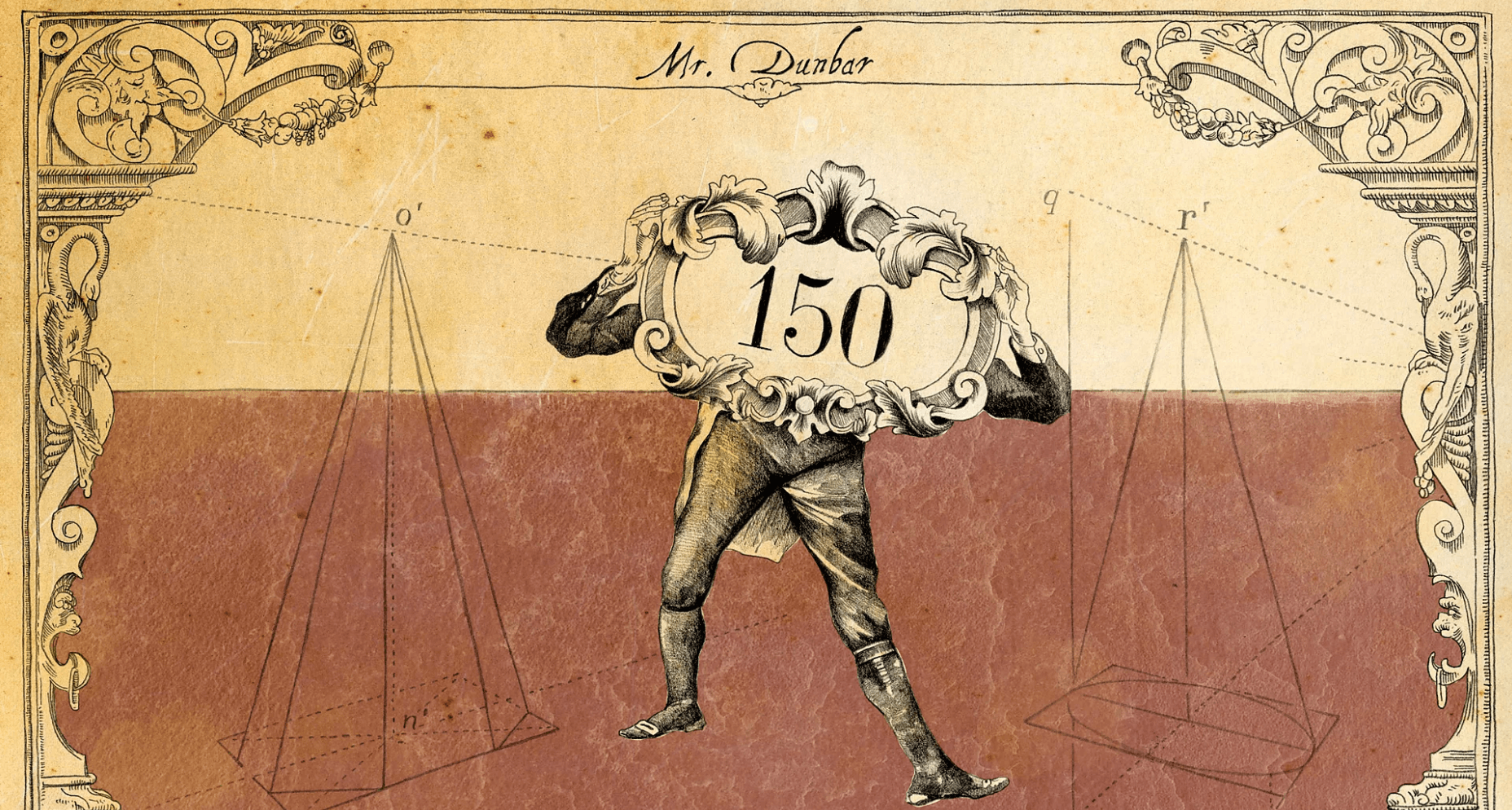
For most of history, coordination came easy, because the world was small. People lived in a tribe or a village where everyone knew everyone by face, by name, from birth. That ease even has a precise limit: Robin Dunbar found that the human brain can hold only about 150 stable relationships.
Below that number, everything holds together on its own. Reputation works instantly. Cheat a neighbor, and by evening the whole village knows, and the next day no one sits down at your table. Knowing everyone by face is the entire mechanism.
But the world did not stand still. Villages grew into cities, cities into nations, trade tied the continents together, and the people around you went from a hundred to millions. Almost all of them are strangers now, and the old mechanism broke. Knowing everyone by face no longer worked.
Below that number, everything holds together on its own. Reputation works instantly. Cheat a neighbor, and by evening the whole village knows, and the next day no one sits down at your table. Knowing everyone by face is the entire mechanism.
But the world did not stand still. Villages grew into cities, cities into nations, trade tied the continents together, and the people around you went from a hundred to millions. Almost all of them are strangers now, and the old mechanism broke. Knowing everyone by face no longer worked.
The Ladder of Mechanisms
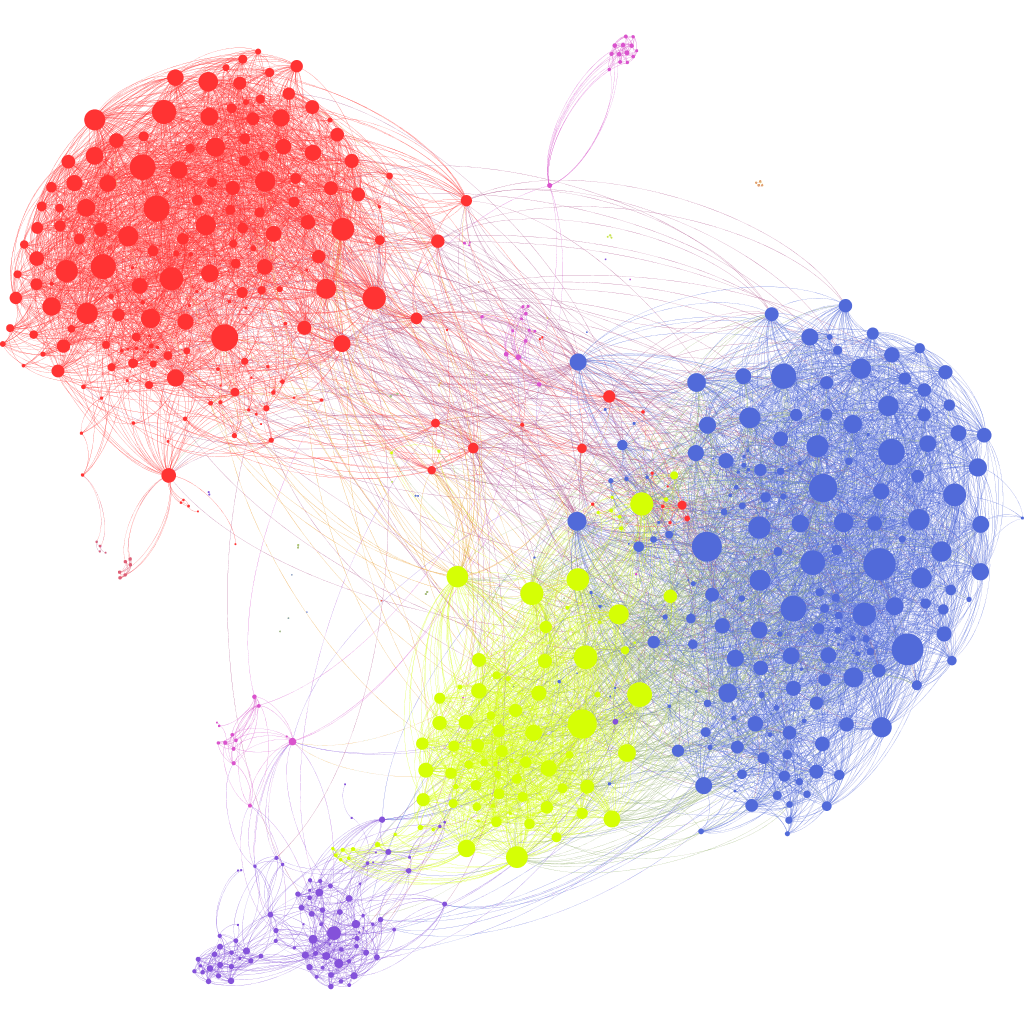
When knowing people personally stopped scaling, civilization did not stall. For every new level of complexity, humanity answered with a new mechanism for coordination, a tool that let people deal with those they had never met.
Language came first. It let people pass on a thought, share a plan, and align their actions with words instead of gestures. Then came writing, which carried an agreement beyond the limits of human memory. A deal could now be recorded, and it outlived both the dispute and the people who made it.
Then came money, and the radius exploded. Before it, trade ran on barter, and barter has a hard limit: it needs a match of wants. I have grain and I need shoes, so I have to find a shoemaker who needs grain. Money removed that condition. Now you could trade with anyone, without knowing them at all.
Then came law. It punished betrayal even between strangers. What protected you was no longer a neighbor or a relative, but a rule that applied to everyone alike. And after it came the corporation, which united thousands of strangers under one goal and made them work as a single body.
Each of these mechanisms absorbed its level of complexity and widened the radius of coordination. From a hundred familiar faces to a stranger on the other side of the world, now tied to you by a shared language, a shared currency, and a shared law.
Language came first. It let people pass on a thought, share a plan, and align their actions with words instead of gestures. Then came writing, which carried an agreement beyond the limits of human memory. A deal could now be recorded, and it outlived both the dispute and the people who made it.
Then came money, and the radius exploded. Before it, trade ran on barter, and barter has a hard limit: it needs a match of wants. I have grain and I need shoes, so I have to find a shoemaker who needs grain. Money removed that condition. Now you could trade with anyone, without knowing them at all.
Then came law. It punished betrayal even between strangers. What protected you was no longer a neighbor or a relative, but a rule that applied to everyone alike. And after it came the corporation, which united thousands of strangers under one goal and made them work as a single body.
Each of these mechanisms absorbed its level of complexity and widened the radius of coordination. From a hundred familiar faces to a stranger on the other side of the world, now tied to you by a shared language, a shared currency, and a shared law.
Worth Hundreds of Billions
Money, law, the corporation, all of them rest on one condition. Trust. You trust hundreds of times a day without noticing. You eat food a stranger cooked, you board a plane flown by a pilot whose face you will never see, you keep your money in a bank run by people you do not know. Take that background trust away, and you would never leave the house.
That is why trust is not one mechanism among the rest. It is what makes the whole row work. And four companies proved it better than anyone.
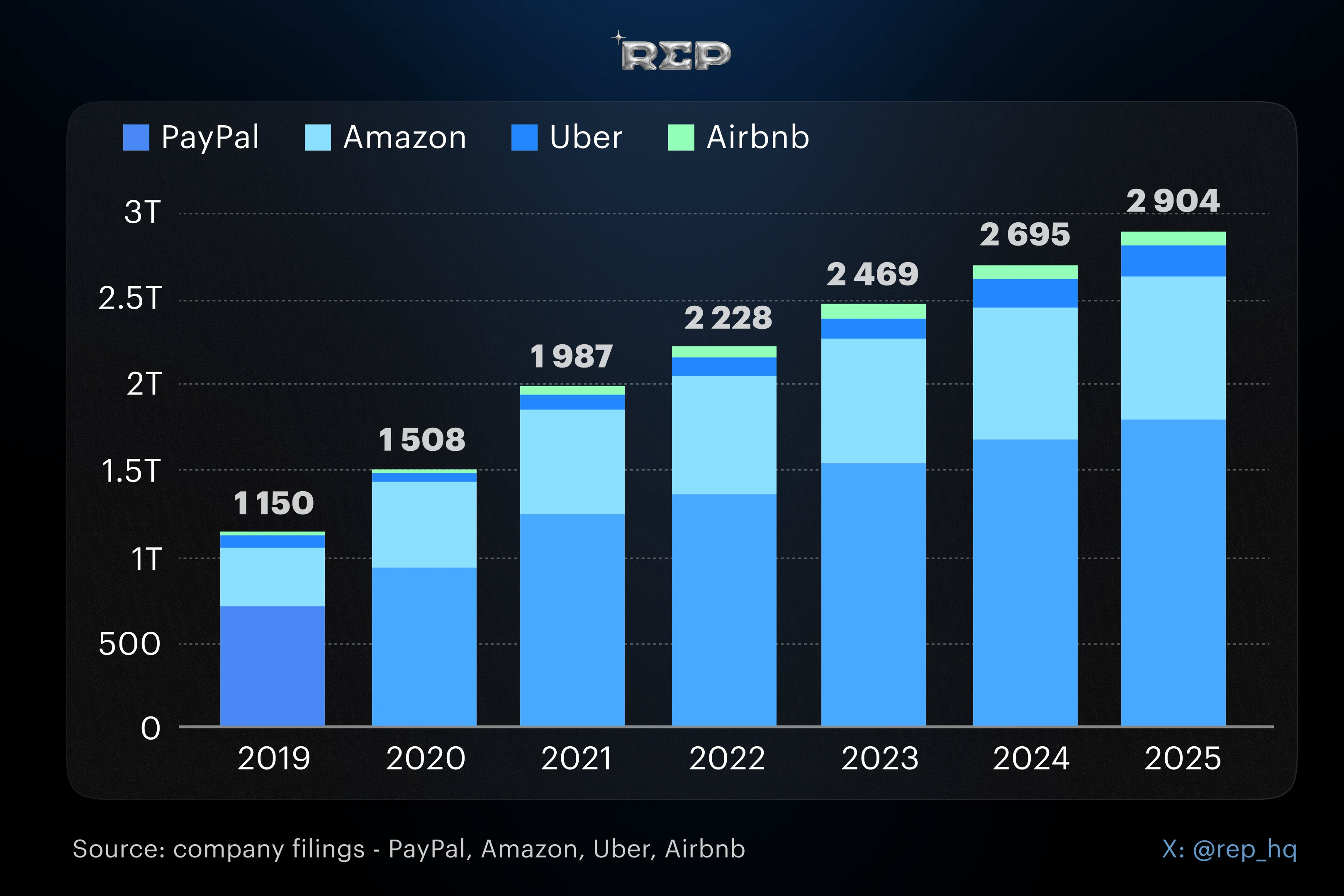
You open the door of a stranger's car and get in at night. Someone you have never met drives you across the city. A century ago this would have sounded insane. Today millions do it every evening. Uber showed you who was behind the wheel: a name, a route, ratings from other riders. The stranger stopped being frightening, and on that trust Uber built a 150 billion dollar business.
A host hands the keys to their home to someone they are meeting for the first time. A guest falls asleep in a stranger's bedroom, in a foreign country. Airbnb let both sides see each other in advance: reviews, a verified profile, a history of stays. Trust between host and guest became an 80 billion dollar business.
You send money to a seller you will never meet, for an item you have never held. Amazon stepped between you: reviews, ratings, a refund guarantee. Millions of people now buy from strangers every day, and that trust in sellers is worth one and a half trillion.
You send money to someone on the other side of the world, and it arrives in seconds. PayPal stepped between two strangers and vouched for the deal. It made paying a stranger over the internet safe, and a 70 billion dollar business stands on that.
Four companies, one and the same move. Each took two strangers and gave them a reason to trust each other. And every time, that trust was worth hundreds of billions. At scale, trust is not just one of the mechanisms of coordination. It is the main one.
That is why trust is not one mechanism among the rest. It is what makes the whole row work. And four companies proved it better than anyone.
You open the door of a stranger's car and get in at night. Someone you have never met drives you across the city. A century ago this would have sounded insane. Today millions do it every evening. Uber showed you who was behind the wheel: a name, a route, ratings from other riders. The stranger stopped being frightening, and on that trust Uber built a 150 billion dollar business.
A host hands the keys to their home to someone they are meeting for the first time. A guest falls asleep in a stranger's bedroom, in a foreign country. Airbnb let both sides see each other in advance: reviews, a verified profile, a history of stays. Trust between host and guest became an 80 billion dollar business.
You send money to a seller you will never meet, for an item you have never held. Amazon stepped between you: reviews, ratings, a refund guarantee. Millions of people now buy from strangers every day, and that trust in sellers is worth one and a half trillion.
You send money to someone on the other side of the world, and it arrives in seconds. PayPal stepped between two strangers and vouched for the deal. It made paying a stranger over the internet safe, and a 70 billion dollar business stands on that.
Four companies, one and the same move. Each took two strangers and gave them a reason to trust each other. And every time, that trust was worth hundreds of billions. At scale, trust is not just one of the mechanisms of coordination. It is the main one.
Islands
Each of these companies made a breakthrough, but locked it inside its own walls. For years you earned a reputation as the perfect rider, guest, and buyer, then you open a new app and you are nobody again, a blank page.
The platforms solved coordination between strangers, each within its own walls, but the internet stayed a scatter of islands where no one knows you from one to the next. What that means, and what it costs us, comes in the next part.
The platforms solved coordination between strangers, each within its own walls, but the internet stayed a scatter of islands where no one knows you from one to the next. What that means, and what it costs us, comes in the next part.